
-
Naked Pastor

If you walk into a typical American church today, chances are the imagery displayed in stained glass or wall art portrays a look that’s decades old. A lot of the famous paintings of Jesus come from the 60’s and 70’s. Even non-religious art tends to favor the classics from eras long gone. During a recent trip to New York, a friend was surprised that much of the art in the Museum of Modern Art wasn’t all that modern, including pieces by Monet and other artists who died in the1920’s. As people of faith it is our goal to constantly be growing and evolving in our beliefs and understanding of Jesus. One of the basics of our faith is that Christ was resurrected and is alive, not just a historical figure from the past. If that is truly the case, why is our image of Jesus so stagnant?
In an effort to find more “modern” imagery of Jesus, I was thrilled to stumble across the work of an active artist known as NakedPastor. His cartoons and images portray Jesus in a refreshing light, often pushing the envelope beyond the stereotypical image, and showing Jesus as radically accepting, beautifully diverse, and incredibly humorous. Those concepts shouldn’t be new or surprising, yet somehow these days, they are.

David Hayward, the man behind NakedPastor.com, is a longtime artist and former Presbyterian pastor. He was incredibly generous to share some time dialoguing with me about his lifelong ministry as an artist. He used to say he was an “artist trapped inside a pastor’s body,” but after 30 years in the ministry, he quit formal ministry to become a full-time artist, feeling it was his best opportunity to continue to grow.
I first found David’s work as a series of cartoons showing Jesus rescuing a lost sheep from various situations, always exuding unconditional love for the lamb that had been excluded. Yet when I asked him about his favorite images of Jesus, he shared two very powerful pieces.
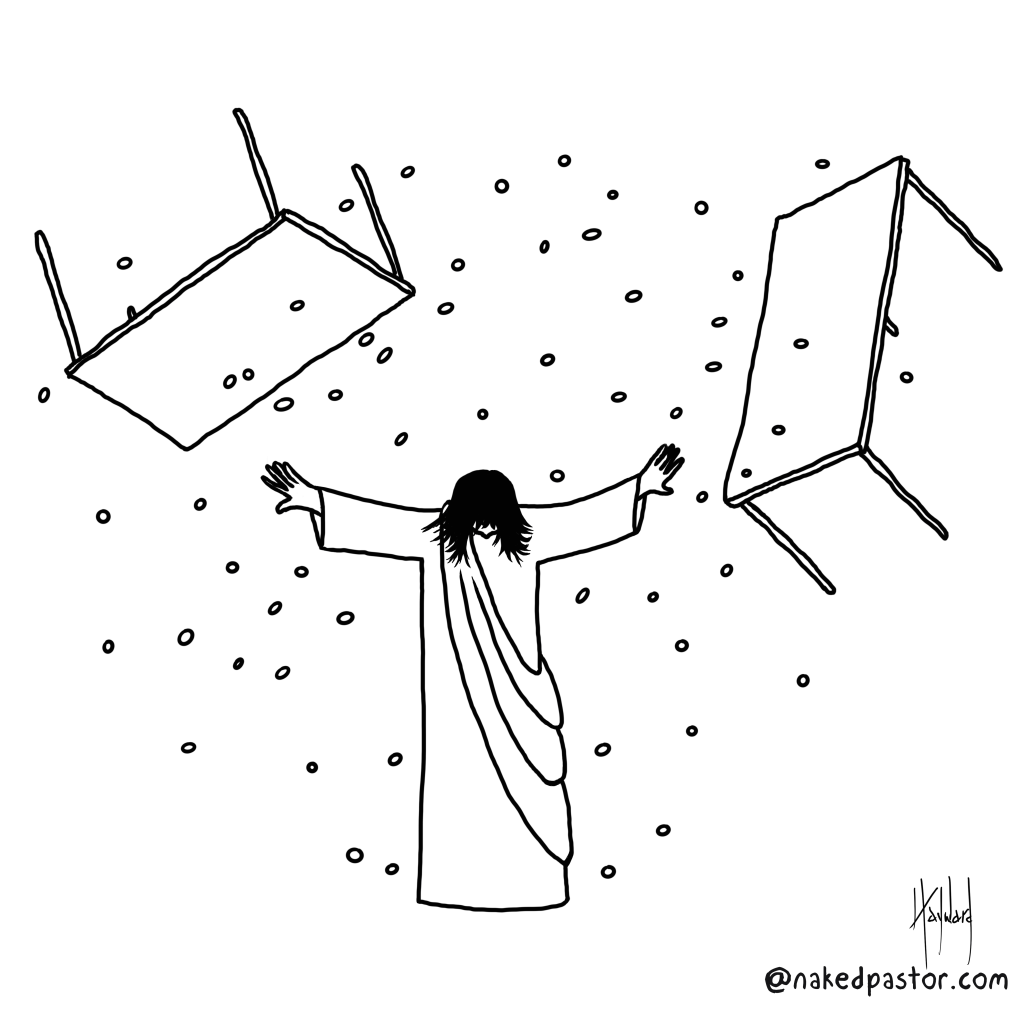
“Overturning” pictures that famous temple tantrum where Jesus flipped the tables of the money-changers. “This is one of my most popular cartoons of Jesus and I think people really like it because it has a superhero vibe or a Matrix vibe.” When asked what story needed telling here, David replied, “I don’t think Jesus had an issue with money in the temple or anything like that. I think what was disturbing was the exploitation of the poor by the establishment, by those in power. This image affirms justice and social action.”
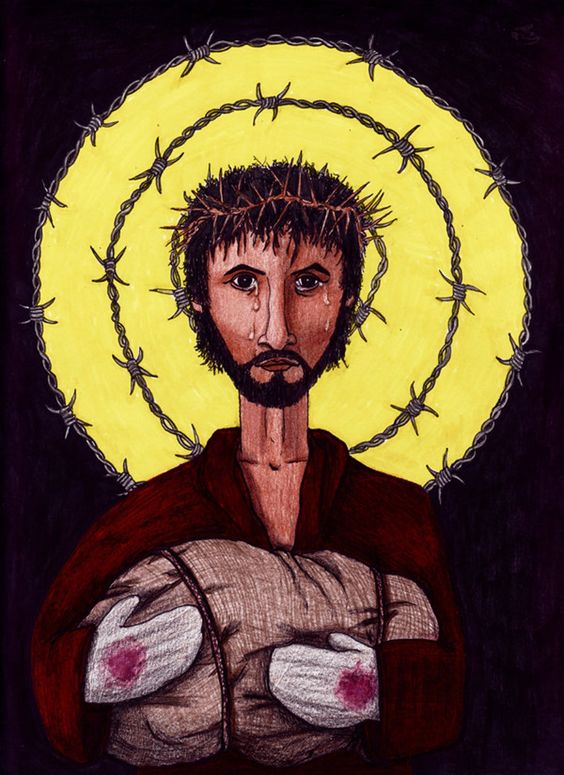
Overturning by David Hayward, nakedpastor “RefuJesus” comes from his Images of Christ series depicting Jesus as a refugee. In describing it David shares “his halo is barbed wire, he’s crying, he’s emaciated a little, and he’s carrying something. There are always refugees, always those in need, so I wanted to draw a picture where Jesus was a refugee. Some would argue that Jesus actually was a refugee with Mary and Joseph when they were in Egypt. I take the theological route of Mother Theresa who said she saw Christ in every child on the streets of Calcutta. I’m trying to shock people into the idea that the people around them are Christ. I think good theology claims the presence of Christ is in everyone.”
David started off as a blogging pastor, sharing a look behind the curtain at the real life of a pastor, being totally honest not just about the great things, but about the struggles and conflicts and doubts. Transitioning from the written word to his art was a method of sharing so much more with very few words. “Art has the power to shock or surprise us. With words our minds build up all these defenses and we come with our prejudices, assumptions, and opinions. Art often bypasses those defenses. That’s why the parables of Jesus are so powerful—it was a shocking way of hearing something. Art has a way of bypassing our defense mechanisms and going straight for the heart. I’m hoping to open people’s minds to see something in a different way.”
When asked how his current image of Jesus compares to the one he grew up with, David shares this great realization: “I’m trying to shatter stereotypes. It’s safe to say Jesus wasn’t white with blond hair and blue eyes, which a lot of us picture. I grew up with an image of God that looks surprisingly a lot like my dad with white hair and a white beard.” He smiles and laughs as it hits him. “I guess it’s kind of me now.”
“That childhood image is always there in the back of my mind and it’s totally false. John Calvin said the human mind is an endless manufacturer of idols, and I think that’s really true. Even the word “God” is potentially an idol, but that’s not God…the word is not the thing. I’m always challenging that, and when I was younger in ministry, realizing the word is not the thing was devastating for me. It was something that transformed my growth and my direction. It’s been a journey.”
I asked David what characteristics he would choose to describe Jesus, or how he would want people to know Jesus. The first word that came to his mind: Disruptor. “In the Gospel’s when you read between the lines you get this impression that Jesus broke protocol all the time because he was interested in something else, something deeper, something more genuine and authentically human. But that meant disrupting the status quo. Jesus would touch people and not be uncomfortable hanging out with a woman, or with so-called sinners, or sex workers, tax collectors, lepers, blind people, or poor people. That wasn’t just a hobby; that was a disruptive way to live in that time and place. ‘Overturning’ is so popular because it conveys this disruption in our way of living and doing business.”
What I love about David’s work is that he offers so much diversity in his work, from cartoons to drawings and paintings. His topics and characters share a wide range of themes that appeal to a wide audience. As he says, he isn’t trying to claim one single image as the true image of Jesus, but throwing his ideas in the pot to contribute to the conversation. If nothing else, art should invite an open door to share and discuss and talk about Jesus and how he shapes our lives. I give thanks for the beautiful work of such faithful artists like David that allow just that.
-
A New Last Supper
Several months ago I started taking art lessons. As I’ve been studying Christian imagery and the implications it can have on an audience, I wanted to get a slightly better understanding of art theory and technique. I signed up for lessons at my local art studio, The Sketching Pad, in Conyers, GA. One day as I walked in to meet my instructor, a new unfinished painting caught my eye. Larger than the typical 8×10 canvases, this wall hanging portrayed what was easily recognizable as an interpretation of The Last Supper. Even partially finished, I could tell this image was different, most notably that the skin tones were not White.

“What is that?!” I asked, instantly intrigued. “Oh, that’s a commissioned piece we’re working on for a church,” they responded, as if it was the most ordinary daily task. I asked more about it and found out that a member of the nearest church, Conyers First UMC, had asked for a piece of artwork that would portray a more authentic image of Jesus and his disciples. After a little more investigation, I was able to sit down with the mastermind behind this piece, Ora Bailey.
Ms. Bailey is a lifelong member of Conyers First, and previous chair of their Leadership Board. Over the last several years, the pastors and leadership have been working hard to shift their church’s image as one that is more relatable and community oriented. The church, whose membership has historically been predominantly White and affluent, recognized that they were no longer reflecting the makeup of their community, which the leadership wanted to address.
Conyers Georgia has experienced a great amount of growth and change over the last ten or so years, and with that the town has become a lot more culturally and racially diverse. The charming local drugstore where we sit and talk, and where Ora works, also has a food counter that serves sandwiches and drinks. She remembers the history of the store when the community was more divided. “I have stories about when there were stools put in at the counter, and people would fight over who was allowed to sit there. That’s not an image you want to ever portray.” Seeing the change and growth in her own store has led her to become an advocate for change in other areas, like her church.
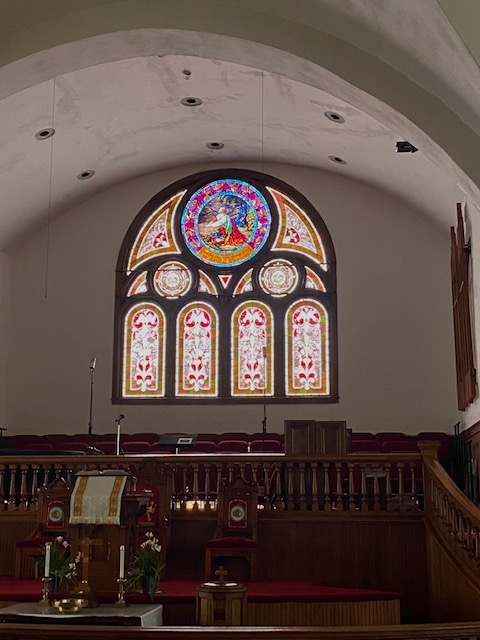


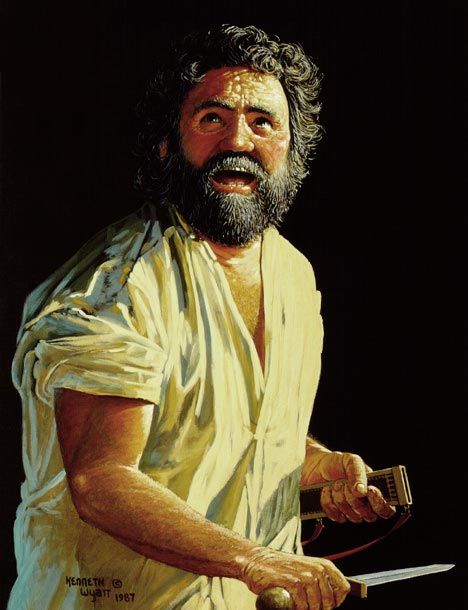
Like most churches, the current artwork hanging in the walls reflects the typical images of Jesus looking European or White. There’s a stained glass window in the Sanctuary with Jesus praying in the garden, which is the first image Ora remembers from her childhood. “It never occurred to me to question it,” she says. There’s also a series of paintings depicting Jesus, Paul and the 12 apostles by Kenneth Wyatt. This series is quite popular in churches around the area, and while beloved by many, they lack any authentic characteristics of first century Israeli men. Ora remembers conversations around these images and how they lack inclusivity. “They’re lovely portraits, but they’re all White apostles. We wanted to move away from all White imagery, but no one was saying it out loud.”


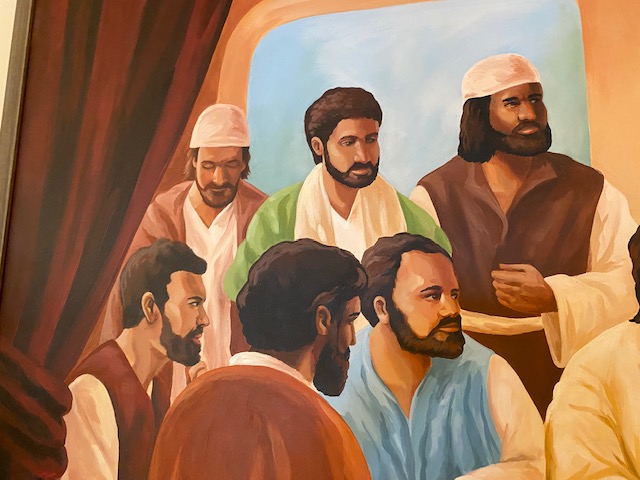
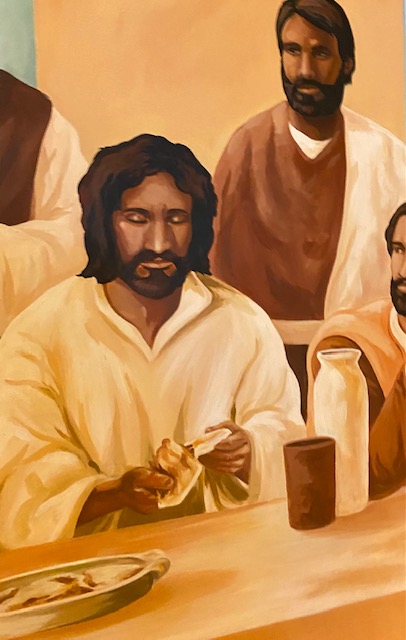
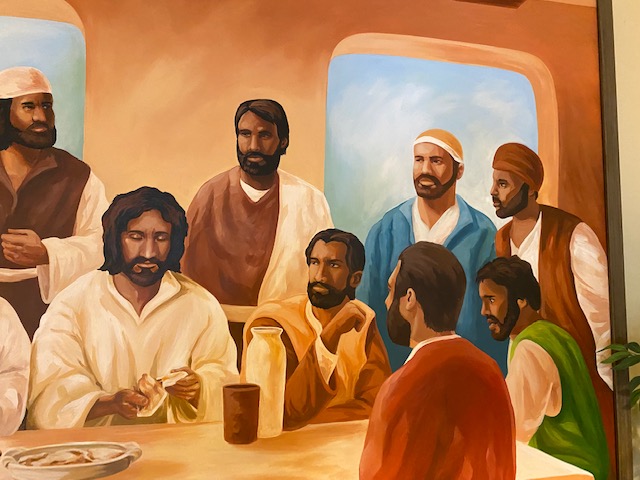
With compassion and courage, Ms. Bailey sought to create a gift for the church that would take a small step in normalizing different skin tones and hairstyles. She worked with the artists at The Sketching Pad to commission a more authentic version of The Last Supper that could hang in the church depicting Jesus and his disciples with more Middle Eastern characteristics. “We need a more open worldview and to be more inclusive on all fronts.” It was her hope that offering an image of people with brown skin would give a bit of representation to people who might walk into the church.
When asked what her goal was with commissioning a piece that showed Jesus in a new light, she smiled and said, “Shock. I think people need a bit of a jolt. I hope people will look at it and be accepting of it.” She’s not just talking about accepting an image, but accepting people who may not look like their typical members. Her compassion is evident in recognizing that welcome and hospitality starts in the small details.
“I really hope we can get to a place where we’re reaching out to everyone in our community to make them feel welcome; I think it’s really important. We can’t touch people’s hearts if we feel we’re one step removed or that we’re different or special.” There is an implication that when we only portray Jesus as White, when we remove Jesus’ ethnicity, it is because we think Whiteness is the superior race. There is simply no room for that in the church. I give thanks for Ora’s mindfulness and courage to continue this conversation and bring awareness to others. The beautiful finished piece, painted by Laura Walters, Gabby Howard, and Megan Illick, now hangs outside the Sanctuary at Conyers First UMC.
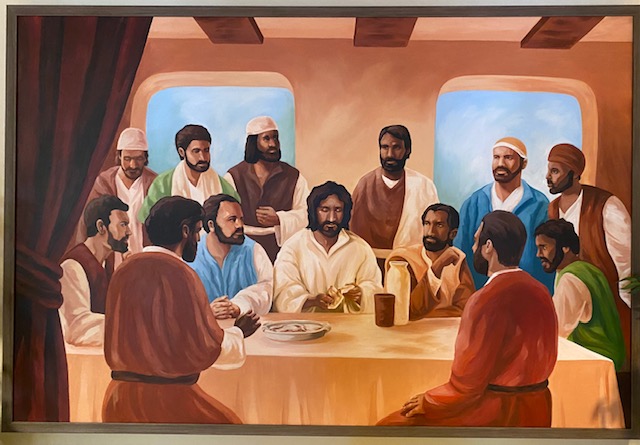
A single image may not be enough to transform an entire community, but it is enough to make people think when they see it. Recognizing that Jesus wasn’t White and didn’t look like “us” includes not just the imagery hanging in our halls, but the theology taught in our sermons and the witness shared in our communities. So much of Jesus’ ministry focused on reaching out to those who were excluded. Changing that narrative may start with an image, but it can expand in how we treat our neighbors and intentionally welcome those who may have felt left out in the past.
-
Barbie Jesus
When we hear the word “image” most of us immediately associate that word with a picture or visual. Yet our image of Jesus can be so much more…it can be a story, a personality, or characteristics that make up who we believe Jesus to be. I spent some time talking with a friend and colleague, Rev. Joya Abrams, an ordained elder in the UMC, about her image of Jesus, and how it is unique from the stereotypical visuals we see in the church.
Starting at the beginning, I asked—What’s your favorite image of Jesus? “I don’t really think in terms of images of Jesus because none of them are accurate for me. I disregard images because they are all wrong.”
I can understand this response, because I have yet to find an image that I find “all right.” It’s hard to find common imagery in America that portrays Jesus as historically accurate. Digging deeper, I ask Joya what images she grew up with…what were the first images she remembers. “Even though I grew up in a completely Black United Methodist Church, we had the pictures of Barbie Jesus (blond hair, blue eyes, pale skin).”

When I first began researching imagery of Christ and its impact in churches, I was very surprised to find that the popular Warner Sallman piece “Head of Christ” was not only common in predominantly White churches, but also in predominantly Black churches. This wasn’t an image just to appeal to individual cultures to make Jesus seem more relatable; it was being portrayed as the one “true” image of Jesus. One of my congregation members who grew up in Nigeria confirmed that they too had images of Jesus with white or light skin as the predominant image. It wasn’t until much later that her culture began adapting an image that more closely resembled the people in the pews.
Returning to Joya’s upbringing in the church, I inquired further. Why would a Black church have imagery of White Jesus? “White Jesus was the assumed Jesus. When I was in high school in the mid-90’s, that was the first time I started hearing any biblical translations besides the KJV. Our church finally began experiencing or acknowledging the discontinuity of how White Christians treated Black people. The people around me started becoming more and more aware of a chasm between how people were treated. I think that the late 20th century saw African American studies in colleges begin to rise and people finally had permission to question why we had this image in our churches; to ask why is this who Jesus is to us? Even before that I had friends who could get behind Jesus’ teachings or what the Bible said about Jesus, but they had no room for White Jesus. That image has been quite a barrier.”
Much of our imagery where Jesus appears White or European is either derived from the artist’s own comfort zone and familiarity, or intending to portray Jesus as relatable to a common audience. Around the world there are images of Black Jesus, Asian Jesus, and a variety of ethnically diverse imagery that appeals to a certain race and culture. But this relatability is not what appeals to Joya, who is more interested in an authentic Middle Eastern depiction. “I’m not even interested in Black Jesus because that’s still not what he looked like. I’m not interested in Dreadlock Jesus. I would love to know what he actually looked like.”
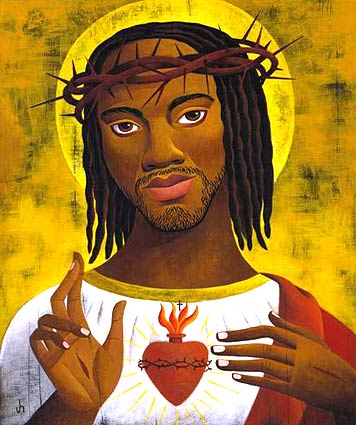
“When I think about images it’s not just the visual but the characteristics that are lain on him that are part of the White culture because it’s not actually Biblical. Somehow we’re reverse interpreting…the triumphalism. Jesus didn’t point to his own power. He pointed toward his Father’s power. He used his power to heal people. He used his power to bring people together, not divide them. It wasn’t my victory over and above yours. It was the wholeness of all creation that the kingdom of God has come.”
Understanding Jesus through scripture is largely left to interpretation, and society tends to focus on a few key aspects of Jesus’ character through scripture. Even in secular settings like sporting events we see reference to John 3:16 promising eternal life to anyone who believes in Jesus. Yet limiting our understanding of Jesus to that one verse is detrimental when it is used as a type of gatekeeping for who is out and who is in. When we continue with John 3:17 we’re reminded that condemnation was not the goal. Joya confirms “the world is condemned by its own actions, not by not believing in Jesus, but by living in a world that’s hateful. Jesus is about wholeness but White Jesus is about triumphalism and White victory over everyone else. The Christian culture purveys these ideas that act like a force field that repels people who are hurting and actually need the Gospel. We’re damaging our brand and it’s a lot bigger than just a visual…it’s an idea, perception, impression that our culture has of us.”

Many of our visuals portray Jesus as meek and mild, especially in Christmas hymns about the holy infant. But Joya feels that seeing Jesus in such a passive way in adulthood does damage to his character. “When we read scripture, he wasn’t nice. He didn’t sit around and just let people roll over him. He was passionate and strong spoken. He verbally wrestled with people and helped them see another way of thinking. He never gave anybody a pass. He told you when you were being unfaithful. I think by painting Jesus as this kind of passive, un-human thing, we take away the reality of the incarnation. He felt things and was able to sit with people and get dirty with them, then turn over tables in the temple. Clearly he wasn’t having a great day and he had a temper. We need to be able to see how that’s holy.”
“A lot of our tradition comes from images and not actual words [scripture]. Especially when people were illiterate and didn’t have a theological education, they didn’t know how to interpret scripture or even translate it from the original Aramaic or Greek. So much of how we understand our religion is mediated by somebody else. So few people realize that.”
Whenever we have an image of Jesus, we have to come to terms with the idea that it only portrays a portion of who Jesus is, and never a fully authentic and accurate visual. Yet it is also time to take a deeper look at how the church is portraying Jesus to the world, and how our cultural assumptions of Jesus’ characteristics have caused harm and separation throughout the church. Whether we attribute the quote to Malcom X or Martin Luther King, Jr., it appears that even today Sunday morning is still one of the most segregated hours in our nation. Perhaps it largely comes down to how Jesus is portrayed.
-
Historical, Christological, Relational
One of the biggest mysteries of our time is how Jesus Christ actually looked. No single image is ever going to get it 100% right. Even if we had the technology to have a photograph, it still could not encapsulate all who Jesus was and is. I’m sure we’ve all seen a picture of ourselves and wondered, “Is that how I really look?”
Scripture is pretty scarce when it comes to a physical description of his looks, yet that hasn’t stopped thousands of artists from creating their own interpretation. As with all art, any image is up to interpretation. Just as we are constantly translating scripture to discover its meaning, we are constantly interpreting art to share with us its message.
When it comes to Christian imagery, I would argue that there are at least three categories of imagery pertaining to Jesus: historical, Christological, and relational.
Historical images are going to portray Jesus as more historically accurate; painting him with traditional features and characteristics of a first century Jewish man living in Israel, such as darker skin, short curly hair, and a beard. Some forensic archeologists have even worked to create a true image of Jesus based off of excavated skull shapes from that time. Historical images seek to portray whom Jesus was as a man, a living person from history, to give more authenticity to the scriptures that he actually lived and breathed and died (and rose again).

A Christological image of Jesus is one that focuses more on his divinity and his God-like nature. These images often focus less on his human aspects and more on his holiness. Many images will portray Jesus with a golden halo, floating in the air, or even light pouring forth from his crucifixion wounds. These images tend to elevate Jesus above human status and show how different he was from us.

Relational images of Jesus are designed to paint Jesus just like us. These are the images that make Jesus in humanity’s image instead of recognizing that humanity was made in God’s. By seeking to make Jesus understandable to modern audiences, perhaps this is where we acquired so many images that paint Jesus to look like the artist’s intended audience. Depending on the image’s origin, we find Jesus can appear very Americanized, Caucasian, Black, Asian, etc. Perhaps it is the artist’s way of making an obscure concept of someone portrayed as both God and human into a more relatable reality.

Similar to the sacraments of Holy Communion and Baptism that use physical and tangible objects to portray harder to grasp concepts of grace and forgiveness, these relational images seek to bring Jesus down to an understandable reality. St. Augustine’s definition of the sacraments as an “outward and visible sign of an inward and spiritual grace” lends itself to the same need to make Jesus, who in our time is very intangible, into a concept we can better grasp.
One concern with each of these categories comes from the limitations they each portray. When an image reaches for a purely historically accurate portrayal, we recognize that any one image will never get it fully right, since we do not know exactly what Jesus looked like when he lived on earth. Any Christological image runs the risk of losing an audience as seeing Jesus as too unapproachable and otherworldly, where he loses some of his humanity. And a relational image created in our own image will likely only relate to a limited audience for which it was intended. These images may further divide humanity in their understanding of Jesus based on their differences, rather than draw them together in their similarities.
-
When an image tells what words cannot
Sometimes a single image is enough to change the way we see things forever. While most Christian imagery is familiar, repetitive, and perhaps even heartwarming, there are some images that can make us look again to understand Jesus’ story and scriptures in a completely new light. One such image is featured in Jerusalem outside the supposed ruins of the High Priest Caiaphas’ house. Upon visiting there over ten years ago, I am still haunted by the memory of one piece of art. Our guide pointed out a mosaic on the outside of the building. It showed Jesus, bound by rope at his hands and shoulders.
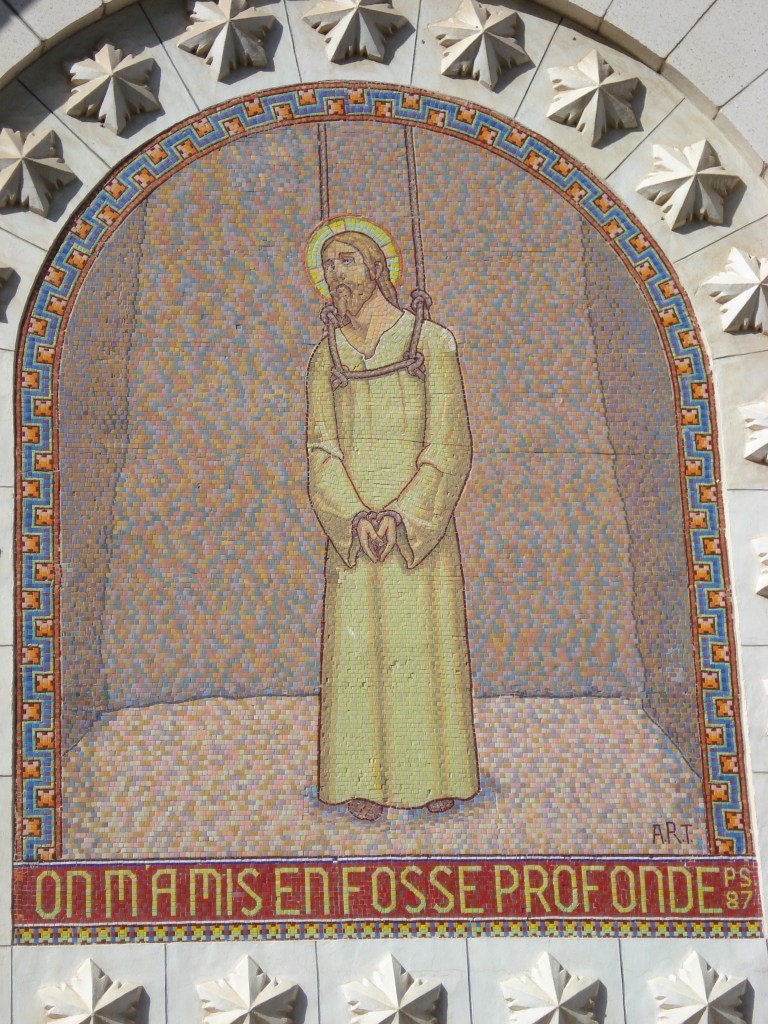
We noticed the tiny reference to Psalm 88 in the corner, and listened as he told us the significance of this mosaic. What came next has stuck with me, and each year on Maundy Thursday and Good Friday, I remember this image that unlocked the scriptures to reveal more of Jesus’ story that previously remained untold.
We remember the scripture describing Jesus’ arrest in the garden. We remember Jesus standing for questioning before Caiaphas. While this takes place we see Peter denying Jesus three times before the cock crows. And then we hear no more, until Matthew’s Gospel gives us this…
“When morning came, all the chief priests and the elders of the people conferred together against Jesus in order to bring about his death. They bound him, led him away, and handed him over to Pilate the governor.” (Matthew 27:1-2)
When morning came. But what happened during the night? We’re so swept up in the story from the time of Jesus’ arrest until his trial, he’s passed back and forth between Caiaphas and Pilate, and then off to the crucifixion he goes. We know the death happened on a Friday but didn’t even notice when a new day began. So what happened that night?
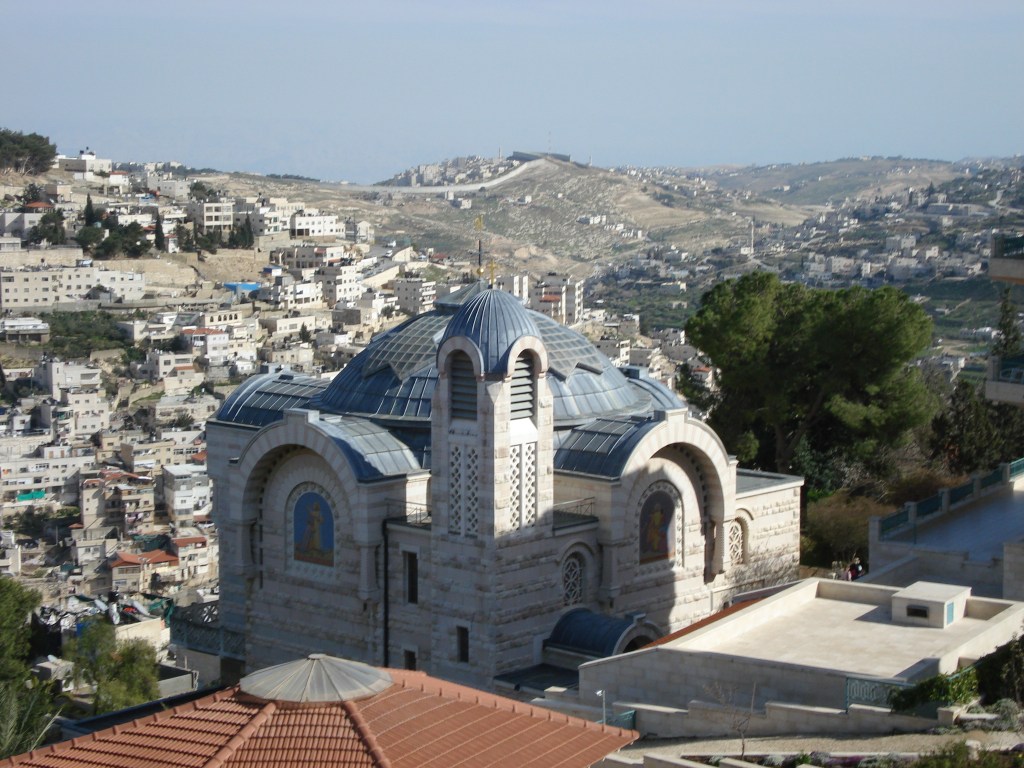
While in Israel, we visited Caiaphas’ house. The High Priest had very large quarters, and it was thought that the trial was held in one of these sizeable rooms. As we entered the massive space, I looked up at the ceiling. Every surface was covered in stained glass windows and glittering tiled mosaics that sparkled in the sunlight. It was stunningly beautiful. Beautiful, and yet hauntingly tragic. Another mosaic depicted Jesus bound at the hands by rope, centered between the Sanhedrin, awaiting the verdict of the trial. Never before seeing Jesus bound by rope, I wondered why.
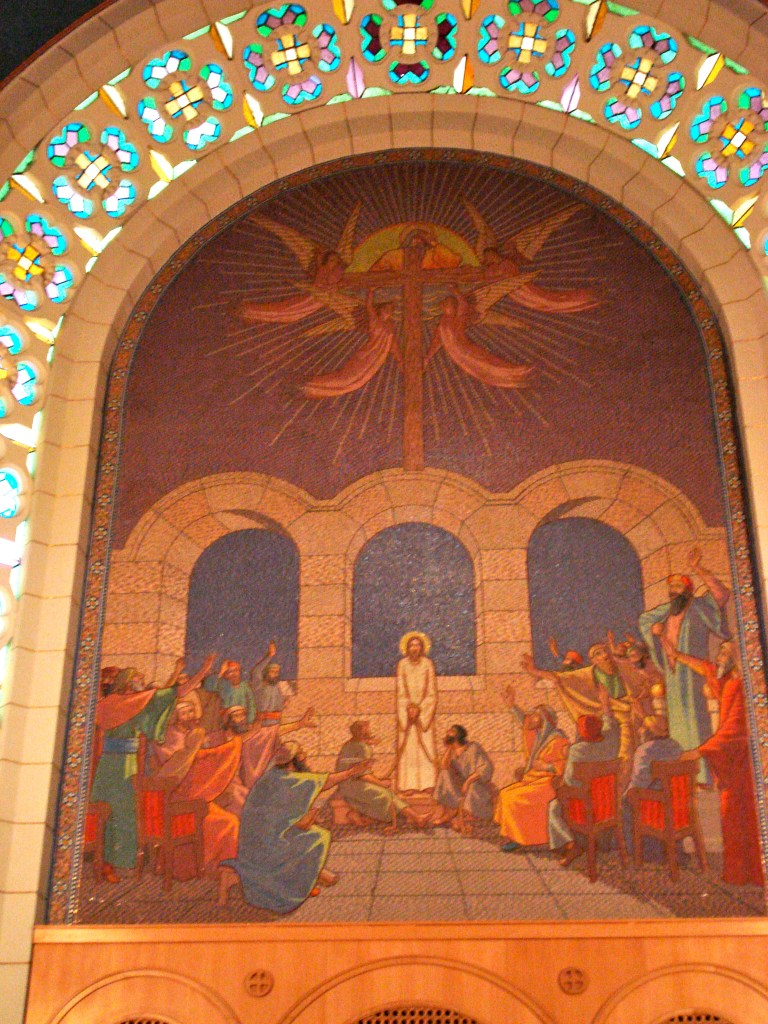
That’s when it hit us. They had to put Jesus somewhere that night. You can guarantee the members of the Sanhedrin weren’t going to lose a precious moment of sleep over who they assumed to be some common criminal. And so we learned of The Pit.
Underneath the house we were led to the dungeon, where holes in the stone showed evidence of how prisoners would’ve been bound by their hands and feet. But even this was not enough for someone as dangerous as Jesus. Instead we were shown a small hole, no more than three feet in diameter, leading down to the pit.
The pit consisted of a small area, perhaps 15×15 feet square, maybe 20 feet deep. No windows. No doors. No lights. The only way in or out was for a prisoner to be lowered by rope, tied around their shoulders and chest, lowering them in through the hole in the roof. Lowering them into the cold, empty darkness of the pit. Alone. Forgotten. This is where it is believed Jesus spent his last night before his death.
Outside in the courtyard, Peter was keeping watch, but also denying Christ three times before dawn. Above in the many luxurious rooms, Caiaphas and others slept soundly, not worrying a moment that they were about to condemn an innocent man to death. But there in the dark, no food, water, or earthly comfort, Jesus spent his last few hours alone. I suspect this night had to hurt more than the lashes and beatings that would come in the morning.
Since seeing those mosaics and the evidence of dungeons below, I can no longer see or hear the scriptures the same way. Remembering the mosaic reference to Psalm 88, we hear the words of the Psalmist that gave description to this image, and wonder if Jesus recited these words during that last dark night.
“O LORD, God of my salvation, when at night, I cry in your presence, let my prayer come before you; incline your ear to my cry. For my soul is full of troubles, and my life draws near to Sheol. I am counted among those who go down to the Pit; I am like those who have no help, like those forsaken among the dead, like the slain that lie in the grave, like those whom you remember no more, for they are cut off from your land.
You have put me in the depths of the Pit, in the regions dark and deep. Your wrath lies heavy upon me, and you overwhelm me with all your waves. You have caused my companions to shun me; you have made me a thing of horror to them. I am shut in so that I cannot escape; my eye grows dim through sorrow.
Every day I call on you, O LORD; I spread out my hands to you. Do you work wonders for the dead? Do the Shades rise up to praise you? Is your steadfast love declared in the grave, or your faithfulness in Abaddon? Are your wonders known in the darkness, or your saving help in the land of forgetfulness? But I, O LORD, cry out to you; in the morning my prayer comes before you. O LORD, why do you cast me off? Why do you hide your face from me? Wretched and close to death from my youth up, I suffer terrors; I am desperate. Your wrath has swept over me; your dread assaults destroy me. They surround me like a flood all day long; from all sides they close in on me. You have caused friend and neighbor to shun me; my companions are in darkness.” Psalm 88
-
Meeting Jesus
When I was growing up, I fell in love with the church. It wasn’t until later that I really fell in love with Jesus.
In my formative years, church was the place to go to connect with your friends, learn about the Bible, and get emotional over the music. In youth group we always ended the night collecting as many hugs as we could and getting “filled up” to face the week ahead.
My understanding of Jesus was limited to a man who loved me so much that he died for me, and I felt the need to behave and be good in order to not disappoint him. This Jesus I first knew was often described as I imagined a hippie: the long-haired, sandal-wearing peacemaker. As I wandered the halls of the church my first memory of an image is of Warner Sallman’s Christ at Heart’s Door. Jesus stands before a massive wooden door, dressed all in white, impeccably groomed, almost glowing with light, with a fist raised mid-knock. Instead of feeling comforted or connected to this image, I often felt confused. Who was on the other side of that door? Why was he knocking? And why was he white?
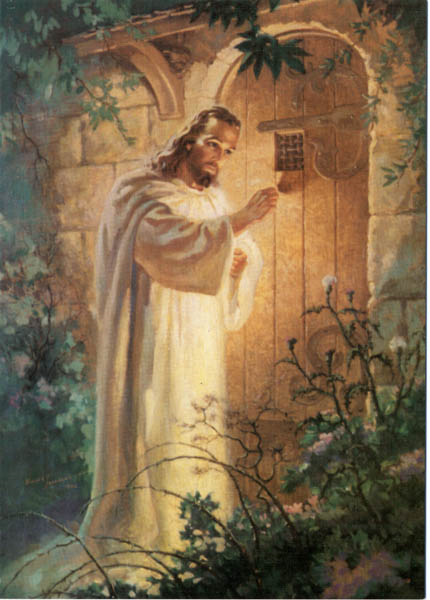
Pair this image with having an older brother who wore his hair long and wavy, dark strands with blond highlights bleached from the sun. His light stubble and blue eyes often caught the attention of others, and people would often joke that he looked like Jesus. One time a stranger told him so, and my brother slowly turned his head and with all the seriousness he possessed replied, “I am.” Laughing at the absurdity, I rolled my eyes and thought to myself how my brother was far from perfect, and again, how Jesus wasn’t white.

When I was a teenager I wrestled with anger at the injustice I saw around me, with powerlessness at being bullied, and with the struggle to forgive the people who hurt the ones I loved. Yet the only images of Jesus I knew about were the ones of the clean, pampered, peaceful Jesus who seemed too perfect to ever get close to, or the bruised, bloodied, crucified Jesus who made me feel guilty for my depravity. Surely there had to be something in between.
It wasn’t until much later that I began to discover a Jesus who also got angry at injustice, stood up to bullies, and forgave even his vilest betrayers. This was a Jesus I wanted to know. This was a Jesus I could relate to, no matter when he lived or where he came from or what he looked like.
While scripture and stories play a huge role in our understanding of Jesus, the images that we are exposed to also have a profound impact on our understanding. The church I experienced seemed to only offer a limited understanding of who Jesus was because the imagery I saw and storytelling I heard didn’t always match up. Perhaps that began my search for something more…images that more fully portrayed who Jesus was, and stories that shared the full range of his character. That’s where I want to invite you, dear reader, to help me in seeking a more faithful image of Jesus. What was the first image of Jesus you remember seeing as a child? How has your image of Jesus changed as your faith evolved? What churches are getting it right in their artwork and imagery? Allow me to learn more by sharing what speaks to you.
When I was growing up I fell in love with the church…with the people, the music, and the feeling of connection I experienced in those walls. But it wasn’t until later that I fell in love with Jesus. Now having served in churches for over 20 years, I have learned how essential it is to first introduce people to Jesus, to let them fall in love with his story and character and the richness of his image. Once people fall in love with Jesus, their love for the church will follow.
-
Art Imitates Life
Close your eyes and picture this…ok perhaps not while reading. Keep your eyes open and picture in your mind the first image you think of when I say…Jesus. Do you imagine a porcelain-skinned man with long, wavy dark hair and blue eyes? Do you see a brown skinned man with dark eyes and short curly hair? Do you picture someone who looks like you? Now what does this image say about your understanding of who Jesus is? In the image you pictured, what was Jesus doing? Was he cuddling a lamb or welcoming to a child? Was he beaten and bruised and hanging from a cross? Was he serenely gazing up at something unseen as if Olan Mills were capturing his portrait?

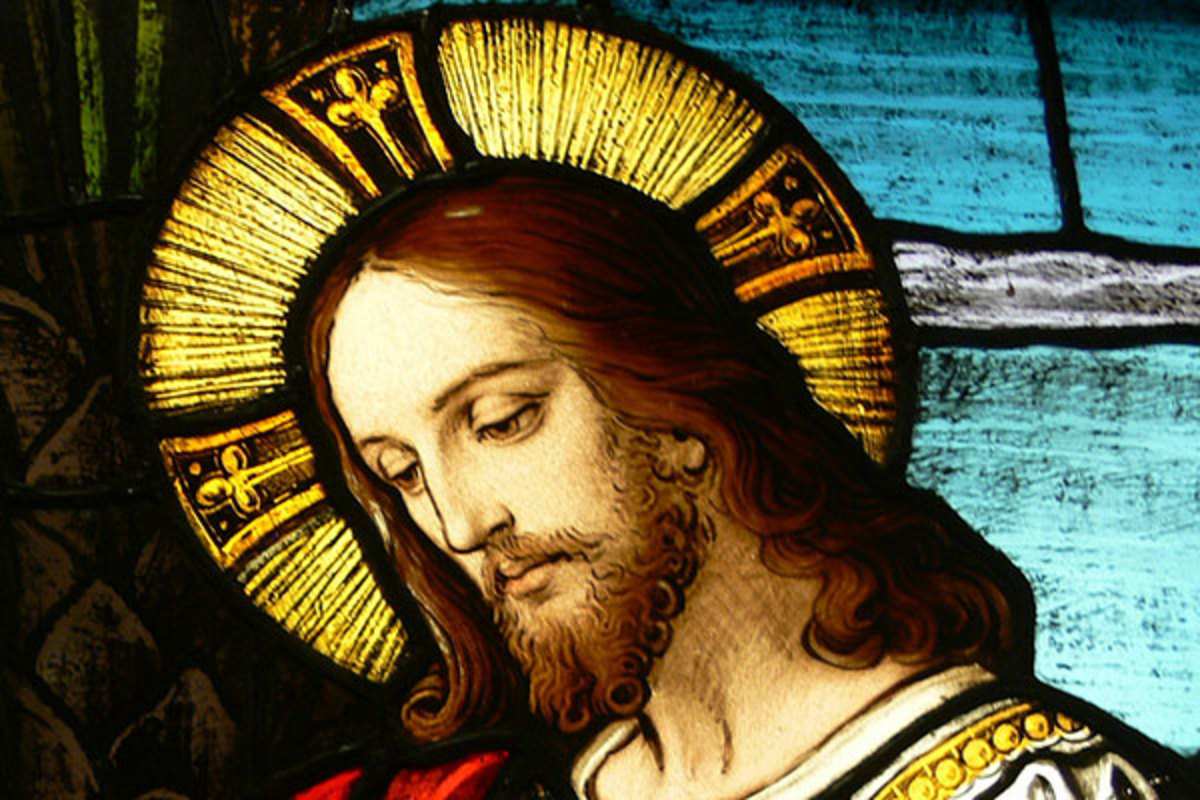

Whether we realize it or not, the pictures we have been exposed to through art, movies, stained glass windows, and other imagery have a profound influence on how we understand Jesus. And the majority of modern day churches and even ancient cathedrals are offering a very limited view of Jesus based on their artwork and imagery.
While scripture and stories play a huge role in our understanding of Jesus, the images that we are exposed to also have a profound impact on our understanding. It’s like reading a book and then seeing the movie, and realizing that the images in your head didn’t quite match whom the casting director chose. After awhile, when we go back to read that favorite book again, our imagined pictures of the characters are no longer accessible, and we can only picture the actors we’ve seen on screen. When we read scripture, do we picture Jesus as he’s described, or as we’ve seen him portrayed in art?
As a doctor of ministry student, I am on a quest to better understand how Christian imagery influences our faith and how limited or stereotypical imagery may be harming our church’s understanding of hospitality. I will be sharing stories of people whose image of Jesus changed as their faith evolved, artists who saw a need for more authentic representation, and resources I think share a more faithful image of the full range of Jesus’ character. I invite you to join in this journey by sharing your reactions. Which artists should I discover? Who has a great story to tell? What are your favorite images of Jesus? Maybe together we’ll find a new favorite.
 Facing Jesus